

HubSpot
Connect HubSpot via OAuth, bring its contacts into Callab with the HubSpot - Bring Contacts template, and push updates back with the HubSpot webhook templates.
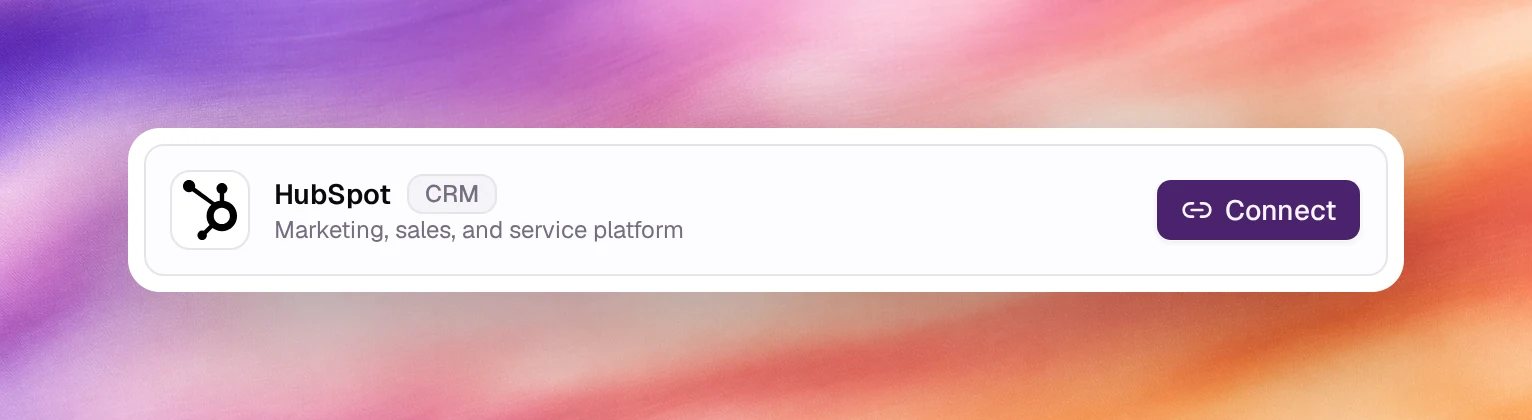
HubSpot connects with Connect in the Connect a CRM dialog: an OAuth sign-in on HubSpot’s side, no key to paste. Its category in the dialog is CRM, described as “Marketing, sales, and service platform”.
Connect
Open Integrations
In the sidebar choose Integrations, then Add connection.
Connect HubSpot
Find HubSpot and choose Connect. Connect to HubSpot lists the features and permissions; choose Connect there, then sign in and approve the requested access on HubSpot’s consent page.
Check the counter
Back on Integrations, the Connections counter reads 1 more and the account is listed with the status Active. Choose its row to enable its capabilities, see Manage a connection.
Bring records in
Add Flow, then the template HubSpot - Bring Contacts under the Integration tab. The dialog
Clone Integration is pre-filled with a name, a tag and the access_token
variable set to {{access_token}}, which the connection fills. Clone
Integration creates the flow; each run adds the records to Contacts with that
tag. Retry and re-execute settings, steps and field mapping are described in
Automations.
Push data out
Under the Webhook tab, the HubSpot templates are HubSpot - Update Contact, HubSpot - Create Deal, HubSpot - Create Company, HubSpot - Search Companies and HubSpot - Get Deal. Each is one call against HubSpot’s API with the connection’s token; clone it, then run it with Test Flow or from an agent through a webhook step. See Webhooks.
In the agent
Once connected, the system’s actions appear under Your AI Tools in the agent’s tool picker, so an agent can look up or update a record during a conversation. See Tools overview.